HOW TO INTERROGATE SNP ENERGY BILLS CLAIM
09 April 2026
How to demonstrate that the SNP is not telling the truth about energy bills and Scotland’s “low-cost” renewables. A step-by-step guide.
The starting point for judging a claim about how energy bills can be reduced has to be an understanding of bills today, in particular the direct wholesale cost of electricity which feeds into the Ofgem price cap.
This information is contained in the spreadsheet Wholesale cost allowance methodology (Annex 2), which can be downloaded from Ofgem's website.
Tab 1b of the spreadsheet, rows 16 and 17, is the place to look. In the current Ofgem price cap period, the direct wholesale cost of electricity is £77/MWh (and it has bounced around at ~£80/MWh for the last year).
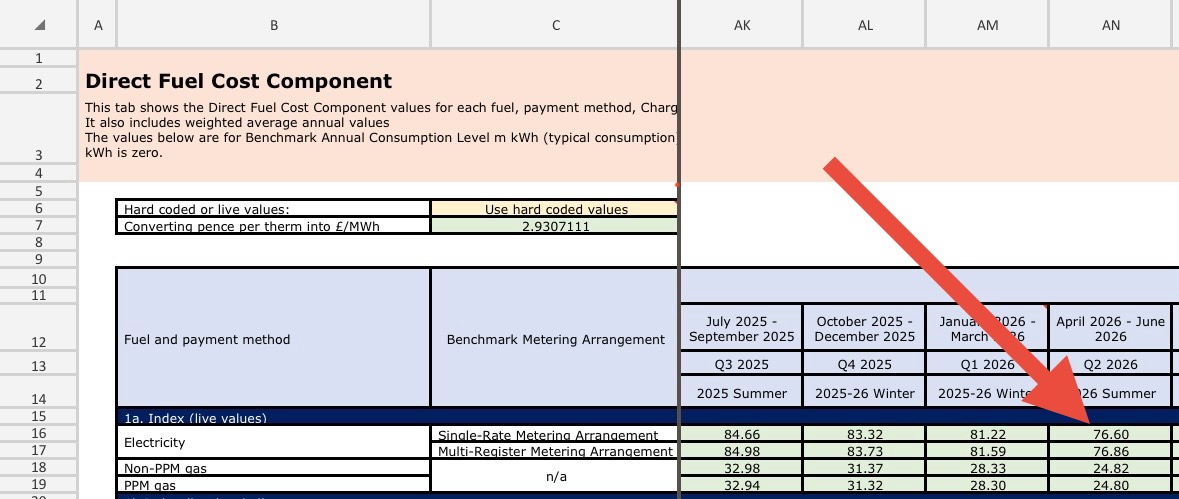
This is the “gas-linked” price which John Swinney wants the UK Government to abolish (or to abolish himself with independence). He presumably wants it to be replaced with a price set by Scottish renewables.
So… what do Scottish renewables cost?
Developers won’t spend the vast sums of money it costs to construct a wind farm unless they are guaranteed a price for the output.
That’s why CfDs (Contracts for Difference) are vital to Scottish renewables - nothing gets built without first securing a CfD.
The CfD prices for the latest generation of Scottish renewables were set in Allocation Round 7, which happened earlier this year.
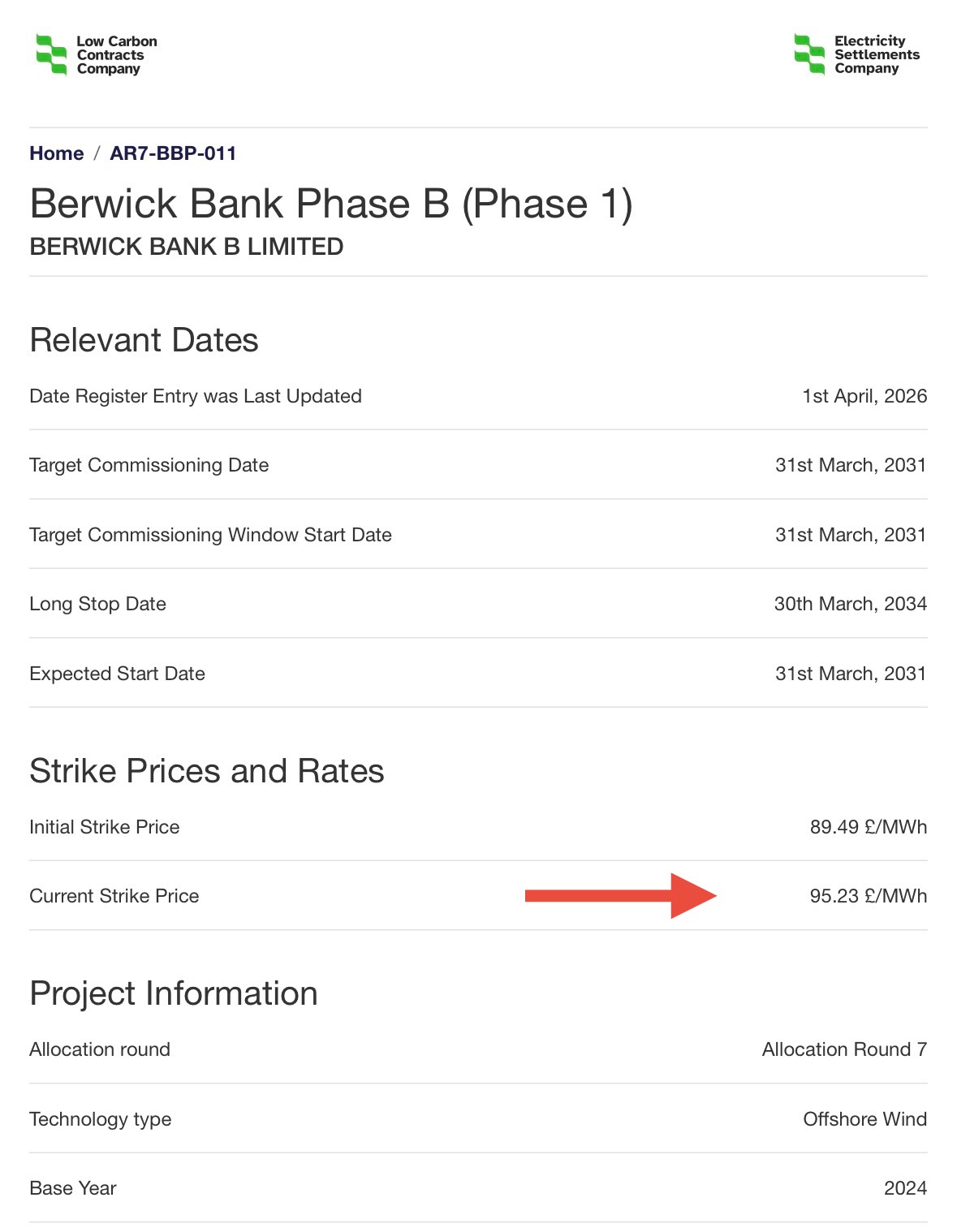
Fixed-bottom offshore wind priced at £89/MWh and onshore wind priced at £72/MWh (both quoted in 2024 prices).
These are the guaranteed prices for output which the wind farms will receive for 20 years (uplifted by inflation each year). The inflation uplift happens even during the period of construction, so the prices have already gone up to £95/MWh and £77/MWh.
Berwick Bank was the only fixed-bottom offshore wind project in Scotland to win a CfD in Allocation Round 7.
Glendye Wind Farm is just one example of the many onshore wind projects in Scotland which won CfDs in Allocation Round 7.
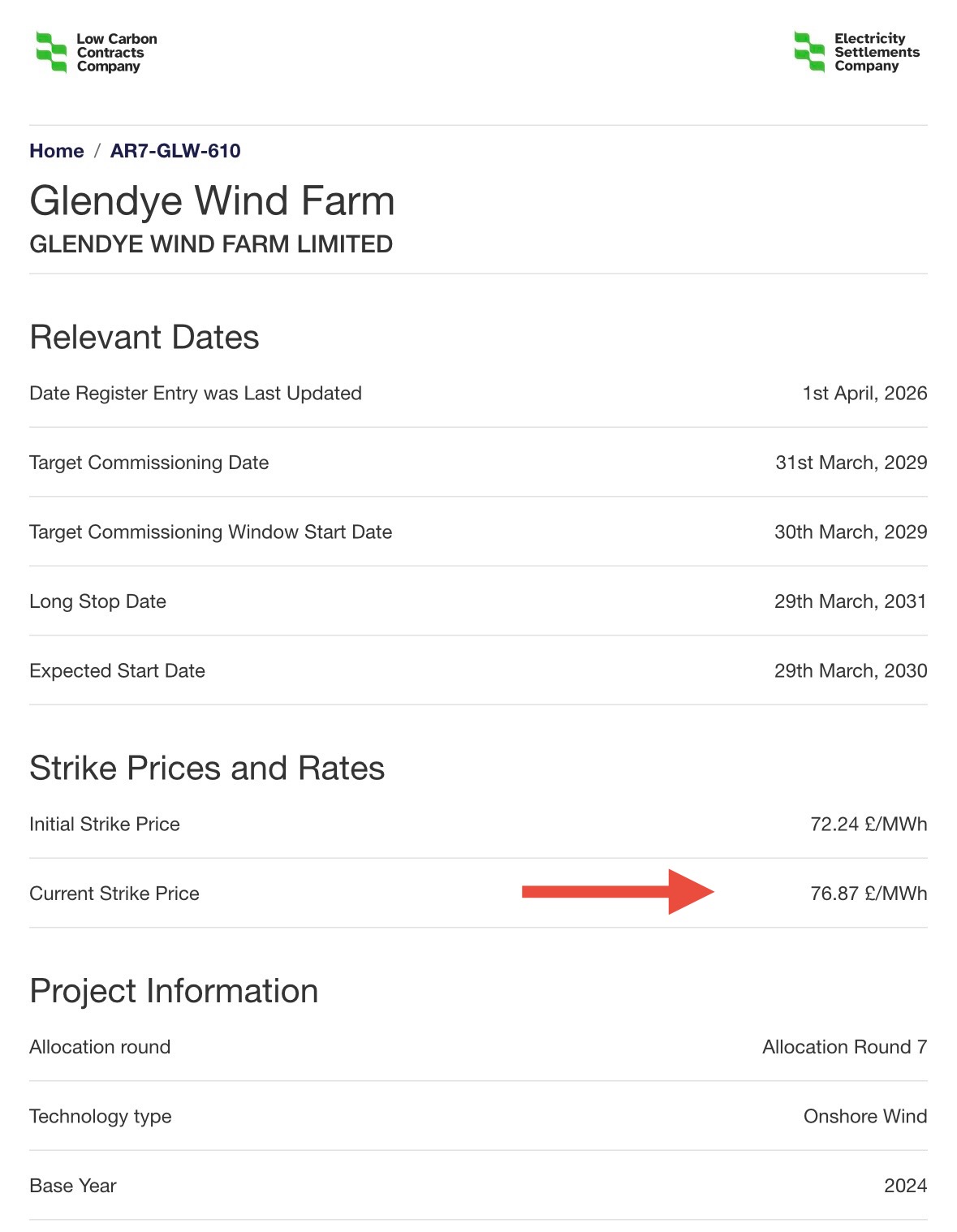
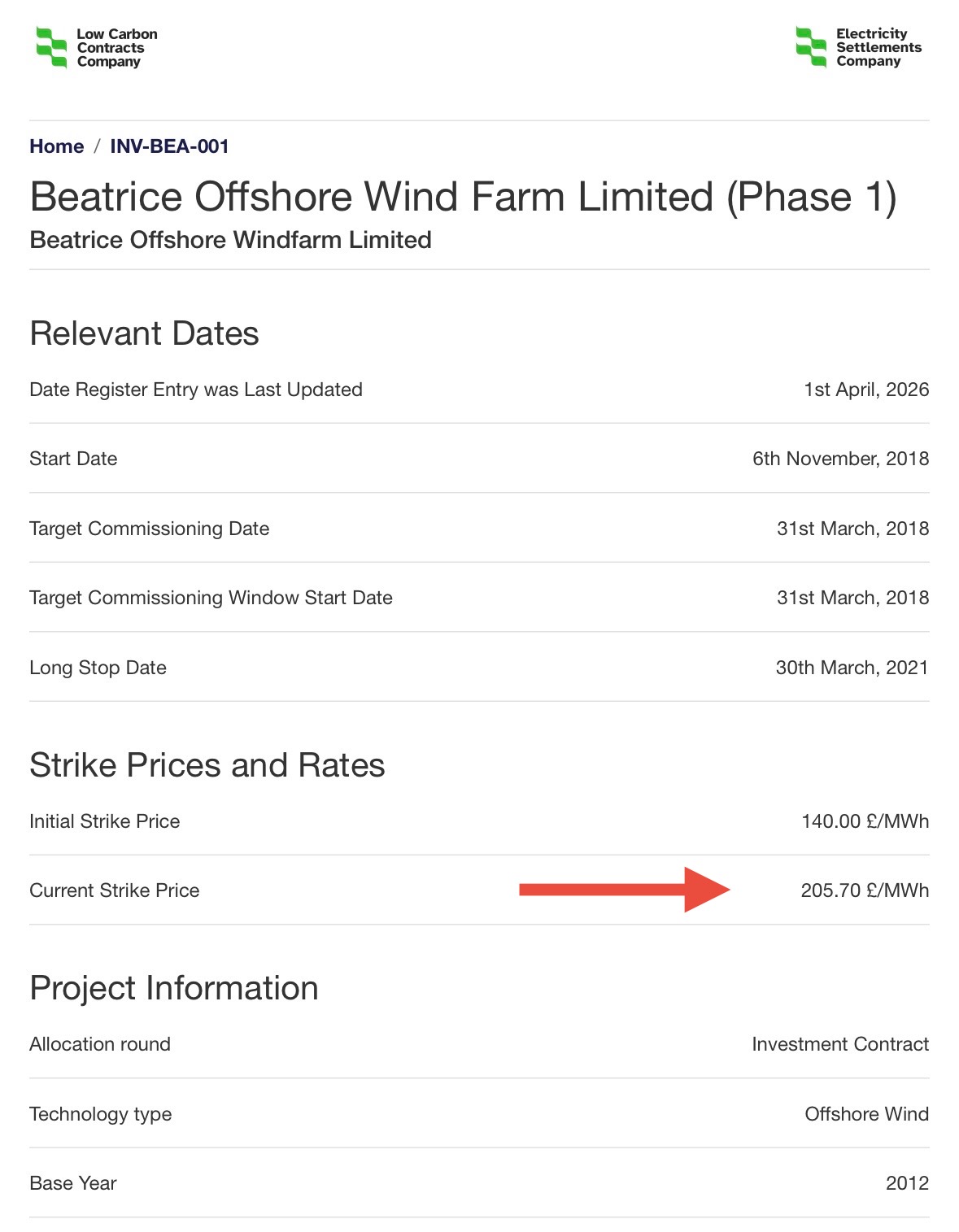
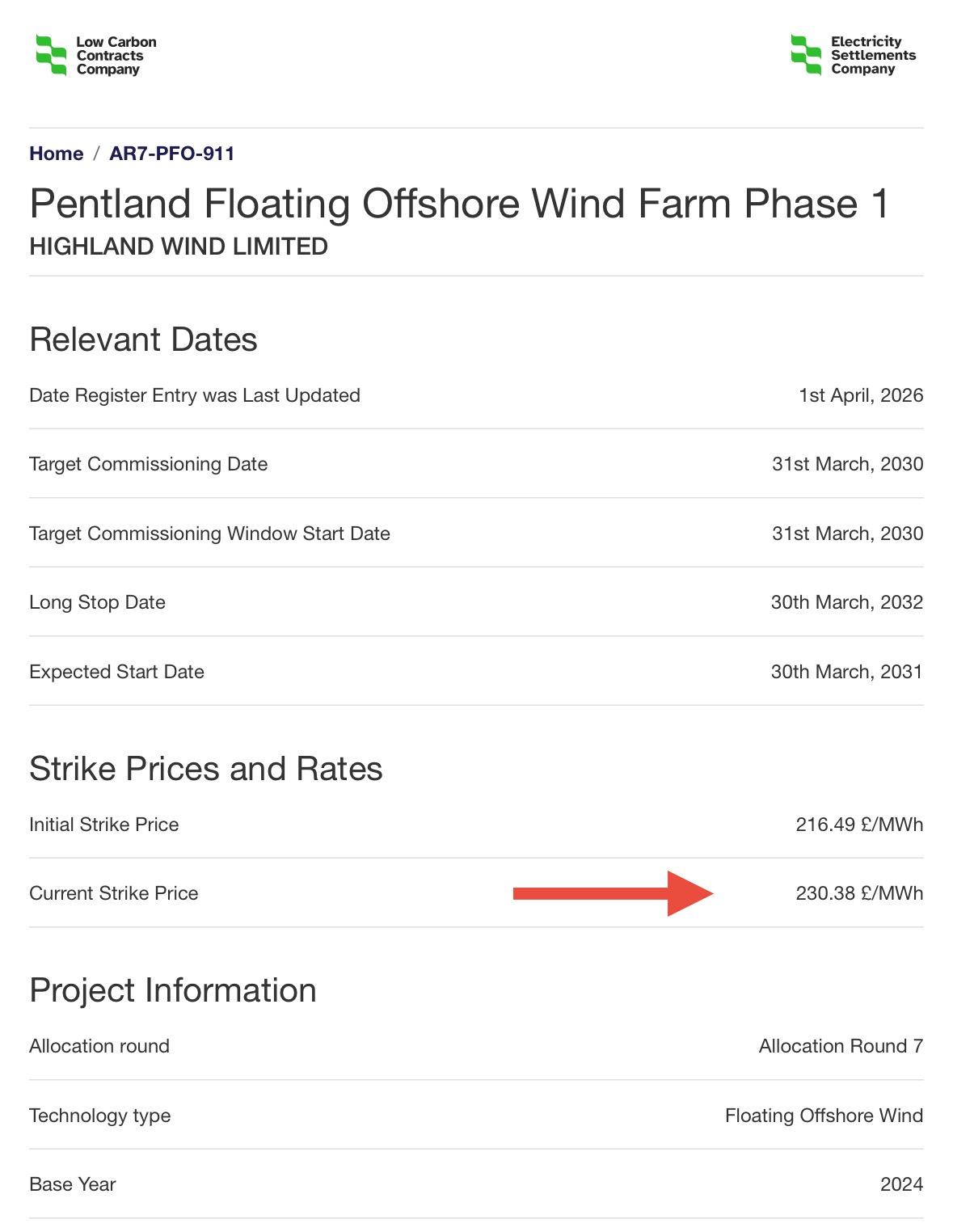
These screenshots are from the CfD Register, which is available on the website of the Low Carbon Contracts Company (the government agency which administers CfDs).
Prices in the early CfD allocation rounds were even higher. Beatrice - a very large Scottish offshore wind farm - operates today with a CfD paying it £206/MWh for output.
And CfD prices for emerging technologies remain very high. Floating offshore wind (the majority of ScotWind is floating) priced at £230/MWh in Allocation Round 7. The Scottish Government actually owns (indirectly, via SNIB, the Scottish National Investment Bank) a minority stake in the Pentland Floating Offshore Wind Farm.
Some lower priced CfDs do exist, but those prices were achieved when inflation was benign and interest rates were at historic lows. That world no longer exists. The Allocation Round 7 prices are the true reflection of the world we live in today.
And without those guaranteed prices, nothing gets built. Berwick Bank will be the largest offshore wind farm in Scotland when it is complete. But it would not be happening at all without the guarantee that consumers will pay £95/MWh (and rising) for its output.
So… when John Swinney recites the mantra that “we must break the link between the electricity price and the price of gas”, remember this:
The direct wholesale cost of electricity in the Ofgem price cap is the gas-linked price. And the latest generation of Scottish wind farms cost the same or more.
John Swinney should be challenged on this forensically and relentlessly. He is not telling the truth about a central plank of his election pitch.
This article was sent to the SNP media team ahead of publication with an invitation to respond, and a commitment to include that response, in full. No response was received.
Please log in to create your comment